By Stephanie Smarrelli
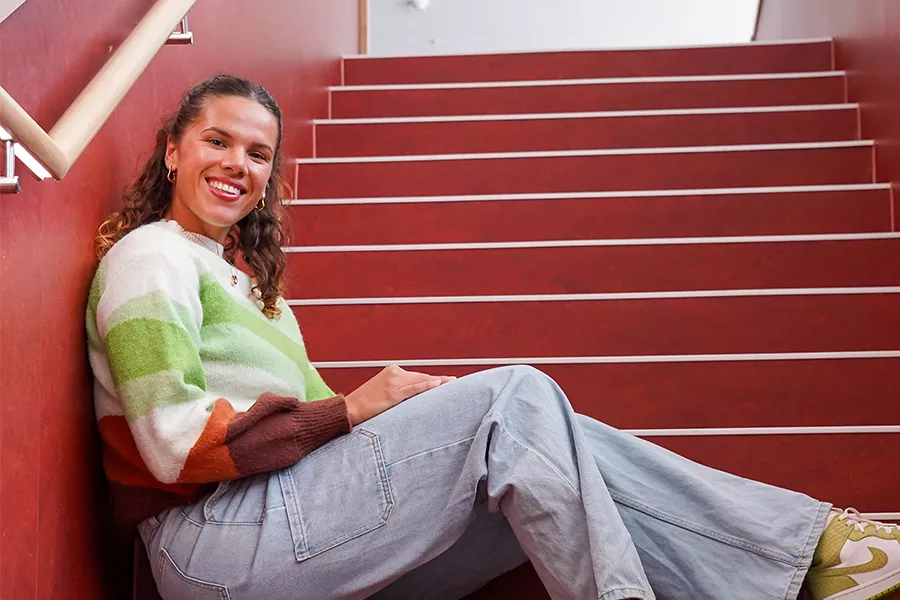
Proud Kamilaroi and Yugambeh Bundjalung woman Charlie Duke is driven by a desire to close the gap for the next generation.
Originally from the Gold Coast, Duke relocated to the rural town of Charters Towers with one goal in mind.
To teach in a regional community.
The town 136km southwest of Townsville is now where she calls home.
The move was inspired by her years at the University of Queensland where she spent a significant amount of time immersed in the Aboriginal and Torres Strait Islander space.
"I learned so much about myself and my culture,” Duke said.
“It gave me my passion for wanting to educate everyone.
“I want to be a driving force in closing the gap for Indigenous and Non-Indigenous education.”
Duke’s personal experiences have motivated her to help the next generation ‘break the cycle’ especially in the classroom.
“Rural and regional schools around Townsville have high Indigenous populations of kids,” she said.
Duke's passion for education led her to regional Queensland.
“I’m trying to do my part to close the gap.
“I never had any First Nations teachers when I was going through school, I’m trying to be a role model to show them you can finish school and get jobs.
“It’s about showing them there are a lot of options out there, they can break the cycle, they just need guidance and someone to believe in them.”
While making a difference in the classroom, she’s also making waves on the netball court, with the 26-year-old, taking to the court in Netball Australia’s First Nations Tournament.
A tournament she hopes continues to pave the way.
“I hope these types of state and national competitions become normalised,” she said.
“Having them gives more exposure to First Nations athletes and not just once a year or when there’s an Indigenous round.
"These competitions help normalise and educate people about First Nations culture and exposes the talent of so many athletes.
“It’s about highlighting them and putting them up on a pedestal at the same level and same standard as non-Indigenous athletes.”
Duke’s netball journey hasn’t been easy.
Duke hopes the First Nations Tournament continues to grow.
The 26-year-old confessed she took a few years away from the sport in her early twenties having felt ‘burnt out.’
“I didn't really know if I wanted to keep pursuing it,” she said.
“My mum was very focused on education, I always knew I was going to go into a career that wasn't netball.
“There was so much I was doing and then I got tendonitis in both my knees, netball was becoming quite a lot.
“I lost my love for it.”
Taking a break turned out to be the best thing she could’ve done.
“Focusing on my career and other aspects of my life brought that passion back,” she said.
“My biggest challenge was trying to find that balance.”
When she arrived in Charters Towers, she started small, easing her way back into netball at club level.
“At the start of last year, I asked one of my friends what club I should play for,” she said.
The 26-year-old took some time away from the sport.
“I didn't have any expectations of playing Premier League.
“But then I tried, I made it and played Premier League again this year.
“I've found my passion for netball again in a competitive space.”
It was thanks to her return to Premier League netball that Duke found out about the First Nations Tournament.
Her coach Rachel King tapped her on the shoulder one day.
“As soon as I heard about it, I wanted to give it a crack,” Duke said.
“I didn't put any pressure on myself knowing I've just come back into competitive netball in the last couple of years.
“I just thought it’s good exposure and a bit of fun.
Duke is grateful for the opportunity to play in the tournament.
“I love playing netball, especially with other First Nations girls.”
At 26-years-old, Duke was grateful to be selected in the Queensland team, with each side allowed to select one athlete outside of the under 23 age group to compete in the tournament.
“It means so much,” she said.
“It's such an amazing pathway, to be able to be a role model for young Indigenous girls because when I was growing up there was nowhere near this amount of First Nations carnivals or anything.
“There wasn’t this to aspire to be in, there wasn’t a First Nations Queensland team, let alone pathways to represent the country like the Black Swans.”
The First Nations Tournament is an opportunity Duke isn’t taking for granted.
"First Nations athletes can sometimes be overlooked in the mainstream competitions we play in,” she said.
“This exposure, spreading awareness and being proud of our culture in an elite setting is important.
“It's important to represent our mobs and for all the girls competing to be acknowledged for their talent and hard work.”