By Stephanie Smarrelli
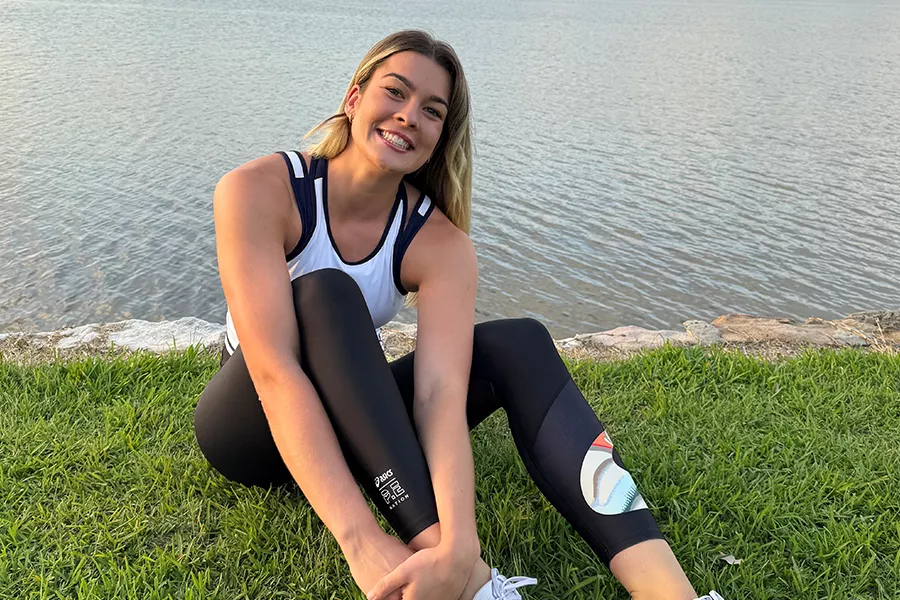
Allie Smith should have been on top of the world.
Smith was seemingly living the dream. She had just won a Suncorp Super Netball Premiership and her career was thriving.
But for the 25-year-old, that couldn't be further from the truth.
“I was constantly living in fear," she told netball.com.au.
“When I won a premiership with the Melbourne Vixens, my mental health was at its lowest. From the outside, I looked successful but inside I was empty."
After spending the last five years to reflect, Smith has been able to recognise where the fear stemmed from.
“I wasn’t sitting in the present, it was the feeling of never being certain of what my future looked like,” she said.
"As an athlete, that's very hard because you don't really know what your future looks like, but I learned over the years how to be present, how to enjoy who I am and love who I am.
“I was Allie Smith the netballer, not Allie Smith the person. But I've learned that success doesn't determine who you are."
Smith's mental health struggles go back as far as she can remember. As a child she was athletic and enjoyed sport. She gave the impression of being a confident little girl, but beneath that was a perfectionist who had to do "everything right".
Smith was part of the Melbourne Vixens 2020 premiership team.
“If I wasn't successful or wasn't achieving something then I didn't want to do it," she said.
“That fear of failure or perfectionism is super common; you're constantly striving for perfection which isn’t really a thing."
Smith confessed though, that with a strong support network behind her she has been able to overcome the self-criticism and fear she once faced, crediting her family with being open and supportive.
“They created a space for me and were willing to learn," she said.
“Our generation is learning more and more about mental health. But the generation above us probably still struggle to speak about it and understand what mental health looks like.
“As a family or someone who's supporting someone with mental health... creating an environment where you listen and are judgment free is important. That's what my family have done and continue to do."
While a support network is vital, Smith acknowledged that a lot of the work came from within.
“A lot of it came back on me taking that first step and being accountable for my own mental health and future," she confessed.
Smith recognised she was accountable for her own future.
“It's super important to first of all understand where it's coming from and what mental health is doing to you.
“That's the first step a lot of people find hard to overcome."
She recommends that those seeking help could start by sharing their thoughts out loud, whether it be on a piece of paper, a text message, a phone call or sitting down and having a coffee with a friend or a family member.
"It is a really powerful way to start understanding the voices in your head and where they come from," Smith said.
“But it's also a very scary thing and that’s something I struggled with for so long, actually saying what I was telling myself out loud.”
The stigma around mental health is still very real, a barrier that Smith is eager to help break down. Hence why she launched Air It Out, to give young people a place to grow confidence, celebrate individuality and feel empowered.
She also offered a nod to initiatives like R U OK? Day and World Mental Health Day.
“You don't necessarily have to have the hard conversation straight away but checking in with your friends every day or every time you see them and asking if they're okay, how they are or what happened on the weekend is a powerful way to start the conversation," she said.
"Mental health comes in many shapes and sizes and it doesn't matter who you are or what you do or how successful you are,” she said.
“Sometimes life is too much, and you need a hand.
Smith acknowledged that mental health is different for everyone.
“Mental health conversations don't always have to be about you struggling or that things aren't going well, it can be ‘I was struggling, this is how I overcame it’ or ‘you're not alone, I'm here with you’.
“The movement is not just one day, it should be every day, every time you catch up with someone, mental health doesn't just come for one day and go away.
“It sticks with people for a long time, a lot of people are on different wavelengths and different journeys with their mental health but we're all human, we all suffer at times, you're not alone.”
For Smith sport and exercise were essential to helping her through her mental health struggles alongside her close connections.
But there’s one piece of advice she has for others who may be struggling.
"It's a pretty bloody scary but seeing a psychologist to get the help that you need,” she said.
“We run through the motions of life whether that be work, sport, school or university and sometimes we don't check in on ourselves and remember why we're really doing life.
“I got lost and frazzled for a long time figuring out my why and it's hard to get there but my psychologist helped.
“I’ve been seeing them for four years now and it's constantly a journey you're on but taking that leap of faith to speak to people who are trained to help you become the best version of yourself is the biggest, scariest but most rewarding feeling that you can have.”
Smith wants to help young people feel empowered.
Her Air It Out program was also born after Smith recognised she was a role model, particularly for women, and wanted to use her voice to be a force for good.
“Having started as a professional netballer, I have a lot of young girls listening and following me,” she said.
“I couldn't figure out mental health for a long time, it took a few rock bottoms, a lot of tears and my mum and dad supporting me to figure out what was going on.
“I want to be that support for someone else; I've been very privileged to have access to the likes of psychologists, sports psychs and culture specialists.
“I know a lot of people don't have access to that, Air it Out is me sharing my knowledge and what I've learned to help people be the best versions of themselves and be someone they can lean on, an older figure who’s been through it and can listen and be that friend you need sometimes when everything's a bit scary.”
Air It Out has three pillars, the first one being mentorship.
"I have a one-on-one mentorship program with young girls and boys that is tailored to what they need and who they are,” she said.
“I'm not a psychologist, so it's more of a mentor or life coach to help others get the words out on paper and if a psychologist is needed, we have a referral network in place.
"One of the most powerful things I can do is be open, vulnerable and authentic and that's what I try to do with Air It Out, it's a platform to break down the stigma of mental health.”
The second pillar are workshops she runs alongside former teammate Teigan O’Shannasy who is an associate nutritionist.
“One of our workshops is called Fuel for Success where we talk to mostly young athletes, school children and teenagers who are going through puberty and figuring out what they want to do,” Smith said.
Smith works with Teigan O'Shannassy to deliver Air It Out workshops on nutrition.
“We talk about feeding their body and mind and what that looks like from an athlete point of view.
“A lot of people that age are doing a lot of sport and both Tegan and I have gone through phases of under fuelling our bodies and it's explaining what under fuelling looks like and what that impact can have on your mental health and your body.”
Smith also touched on the last pillar of Air it Out, her own workshop called Own Your Space.
"Own Your Space is mostly about fuelling your brain, I speak to the things I did throughout my career that I wish I learned earlier which have impacted me positively in a huge way,” she said.
“It's not necessarily all based on sport, it's mostly putting the mirror up to yourself and figuring out who you are and what you want to do.”
In addition to the workshops, Smith also enjoys keynote speaking where she travels to schools and corporate organisations to share her story.
And she has one simple but classic message she hopes to pass onto others.
“It's okay not to be okay,” she said.
"You're not alone but there's ways you can slowly get back to the version of yourself you aspire to be.”
Smith wants others to know it's okay not to be okay.
Smith was recently not offered a new SSN contract with the NSW Swifts but she’s at peace with the club’s decision and has felt supported by those closest to her.
“The decision is a decision that happens in sport, I'm not the first, I'm not the last,” she said.
“It's something you have to be aware of when you're a professional athlete, it's shaped me and proved to me that I'm okay.
“It’s proved the work I've done in the last four years really does help when you go through challenges"
The silver lining for Smith is that she hopes she can use her experience to inspire others.
“I did the work to not identify as a netballer, netball is still going to be there, it doesn't go away," she said.
“If I can inspire young people who potentially don't get picked in teams or that rep side they thrived to get into.
“If their goal is to keep going, then that's great, that's what resilience looks like to them, but resilience looks a lot different to other people.
“For me not being offered a new contract proved I'll be okay no matter what comes my way.”
Help is available, if you’re in need of support here are some of the resources available to you. In the case of an emergency please call 000.
Lifeline: 13 11 14 or www.lifeline.org.au
Beyond Blue: 1300 22 46 36 or www.beyondblue.org.au
Headspace: 1800 650 890 or www.headspace.org.au
Kids Helpline: 1800 55 1800 or www.kidshelpline.com.au
Yarning Safe N Strong: 1800 959 563 or https://www.vahs.org.au/yarning-safenstrong/
Q Life: 1800 184 527 or https://qlife.org.au/
Imagery supplied by Allie Smith & Getty Images.